
Reducing the volume of FGD wastewater
Wet flue gas desulfurization (FGD) is a widely used method for removing sulfur oxides (SOx), particularly sulfur dioxide (SO₂), from flue gases in coal-fired power plants, waste-to-energy facilities, and other industrial combustion processes. In these plants, a limestone or lime suspension in the absorber absorbs the sulfur dioxide. This produces gypsum and other by-products. To ensure stable absorber operation, some of the circulating washing liquid needs to be continuously discharged. This wastewater stream contains high concentrations of dissolved salts, suspended solids, gypsum, silicates, chlorides, heavy metals, and other impurities. In the face of ever stricter environmental regulations, many plant owners are using concepts such as minimum liquid discharge (MLD) or zero liquid discharge (ZLD) to reduce wastewater quantities and to reuse as much water as possible. In many systems for treating wastewater from wet flue gas desulfurization, spray dryers are used to evaporate the waste water and produce dry solid residues for disposal. However, spray drying is very energy-intensive. Pre-concentrating the FGD wastewater before it enters the spray dryer can significantly reduce energy consumption, lower operating costs, and improve the overall thermal efficiency of the plant.
Fouling and scaling
The challenge
Wastewater from wet flue gas desulfurization is a particularly challenging material flow for evaporation processes. The discharged washing liquid is typically saturated with gypsum and contains high concentrations of scaling-relevant components such as calcium, sulfate, magnesium, silicates, and suspended solids. When water is removed, the concentrations of these substances increase further. As a result, deposits can form on the heat transfer surfaces, which impairs the heat transfer process and makes reliable operation of conventional evaporators difficult. Many plants therefore use spray drying as a sound but energy-intensive solution. However, potentially recoverable water is lost in the process. Therefore, the main task here is to reliably pre-concentrate FGD wastewater in spite of its high tendency to fouling and scaling. As a result, the volume of wastewater can be significantly reduced before spray drying and the energy consumption for the downstream drying process can be kept lower.
The solution: Klaren MVR
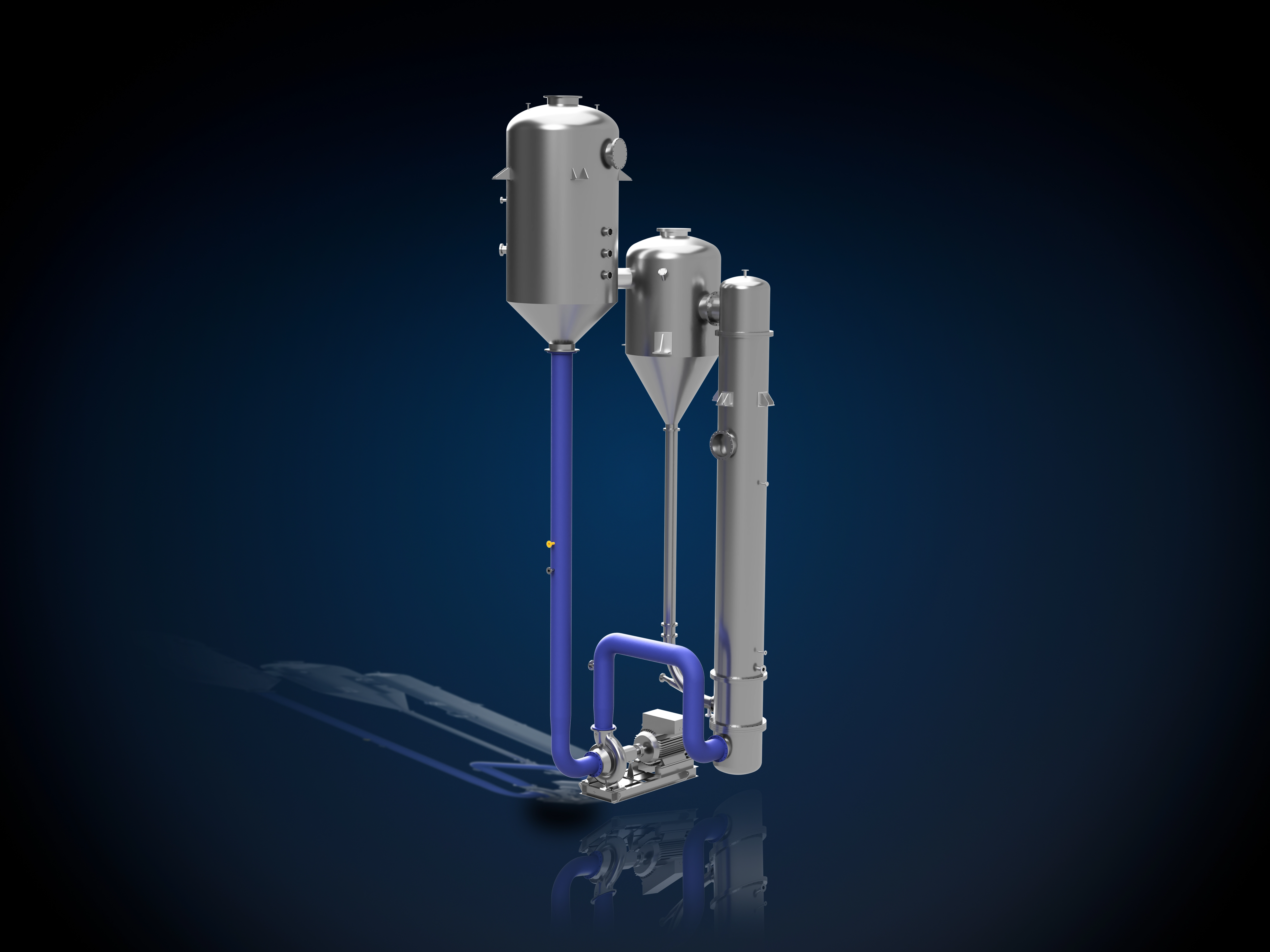
Our Klaren MVR system is specially designed and engineered for challenging wastewater streams that are highly prone to fouling and scaling, which occurs during the discharge process for wet FGD systems. For these applications, the system is equipped with self-cleaning technology. This makes reliable evaporation possible even in operating conditions in which large amounts of gypsum scaling is produced.
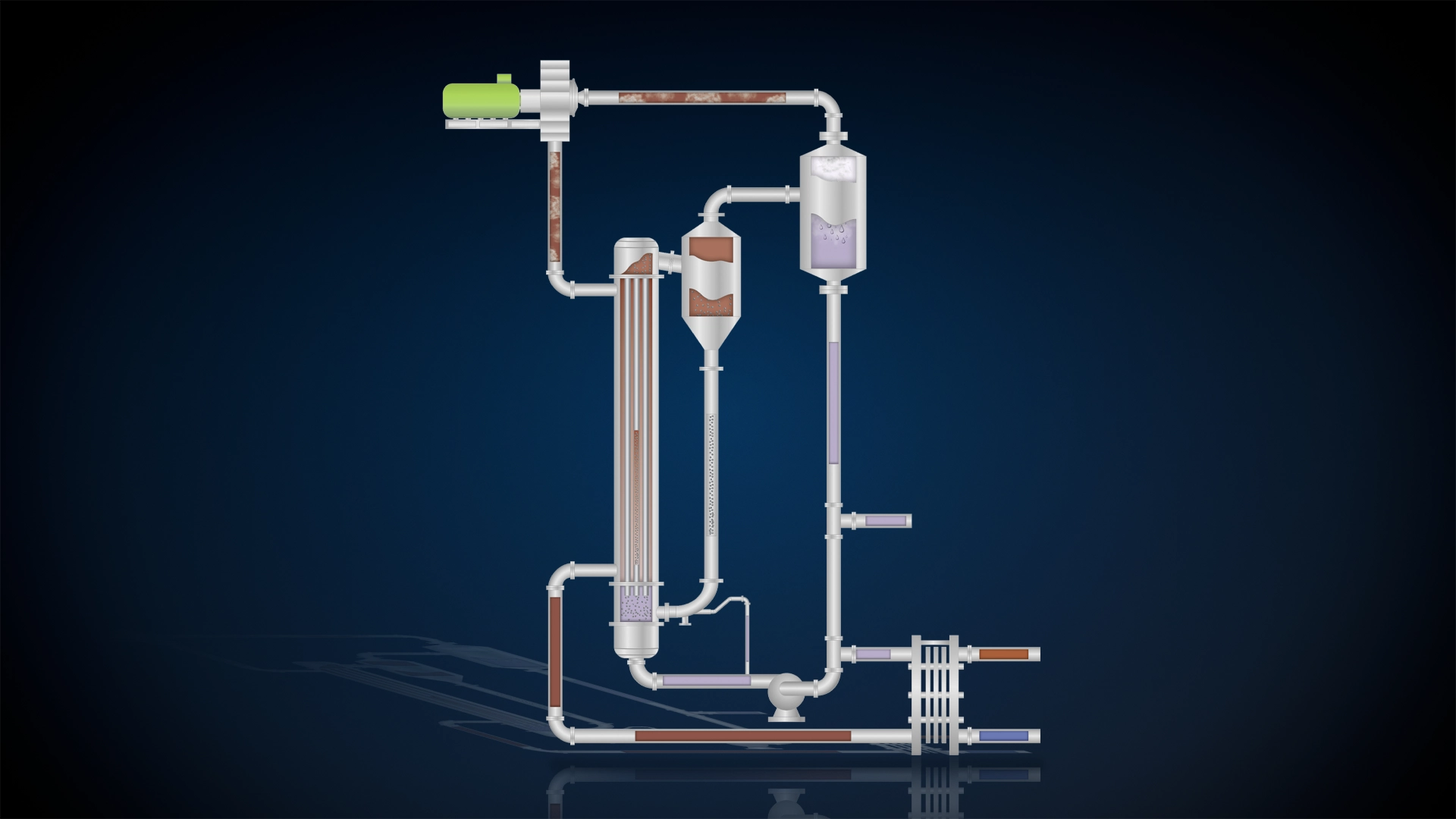
Klaren MVR:
schematic representation
In the heat exchangers of the evaporators, the wastewater flows together with special Cleaning Particles upwards from below through the tubes, where the cleaning particles form a fluidized bed. They are kept in controlled motion by the flow and generate a continuous, gentle scouring action along the tube inner walls. This prevents layers of fouling and scaling from forming. A specially designed and engineered inlet distribution system ensures a uniform flow and a homogeneous distribution of the Cleaning Particles across all tubes. This reliably preserves the cleaning effect over the entire heat transfer area. The result is stable and energy-efficient evaporation even with challenging FGD wastewater. The self-cleaning configuration keeps the heat transfer surfaces clean, allows for reliable long-term operation, and helps to minimize the volume of wastewater.
If Klaren MVR is installed upstream of a spray dryer, it reduces the volume of wastewater that needs to be removed in the downstream final drying process. This reduces the costs and energy consumption of the spray drying process, improving the thermal efficiency of the overall plant and increasing the water recovery rate.
Reliable operation for MLD systems
Self-cleaning Klaren MVR systems provide reliable MLD operation for owners of plants for treating wastewater from wet flue gas desulfurization – even with streams that are highly prone to scaling.
Key benefits
- Reliable evaporation of highly scaling FGD wastewater
- Maximum reduction of the volume of wastewater prior to spray drying
- Lower investment costs for downstream spray drying
- Stable long-term operation thanks to continuous mechanical in situ cleaning of the heat transfer surfaces
- Significantly improved plant availability compared to systems that are not self-cleaning
- Reduced maintenance and operating costs
- Lower energy consumption thanks to stable heat transfer capacity
- Improved overall thermal efficiency of the plant
- Increased water recovery and reuse
- Possibility of utilizing steam for power generation or other process tasks
- Cost-effective way to implement MLD or ZLD requirements
Tried and tested for FGD wastewater
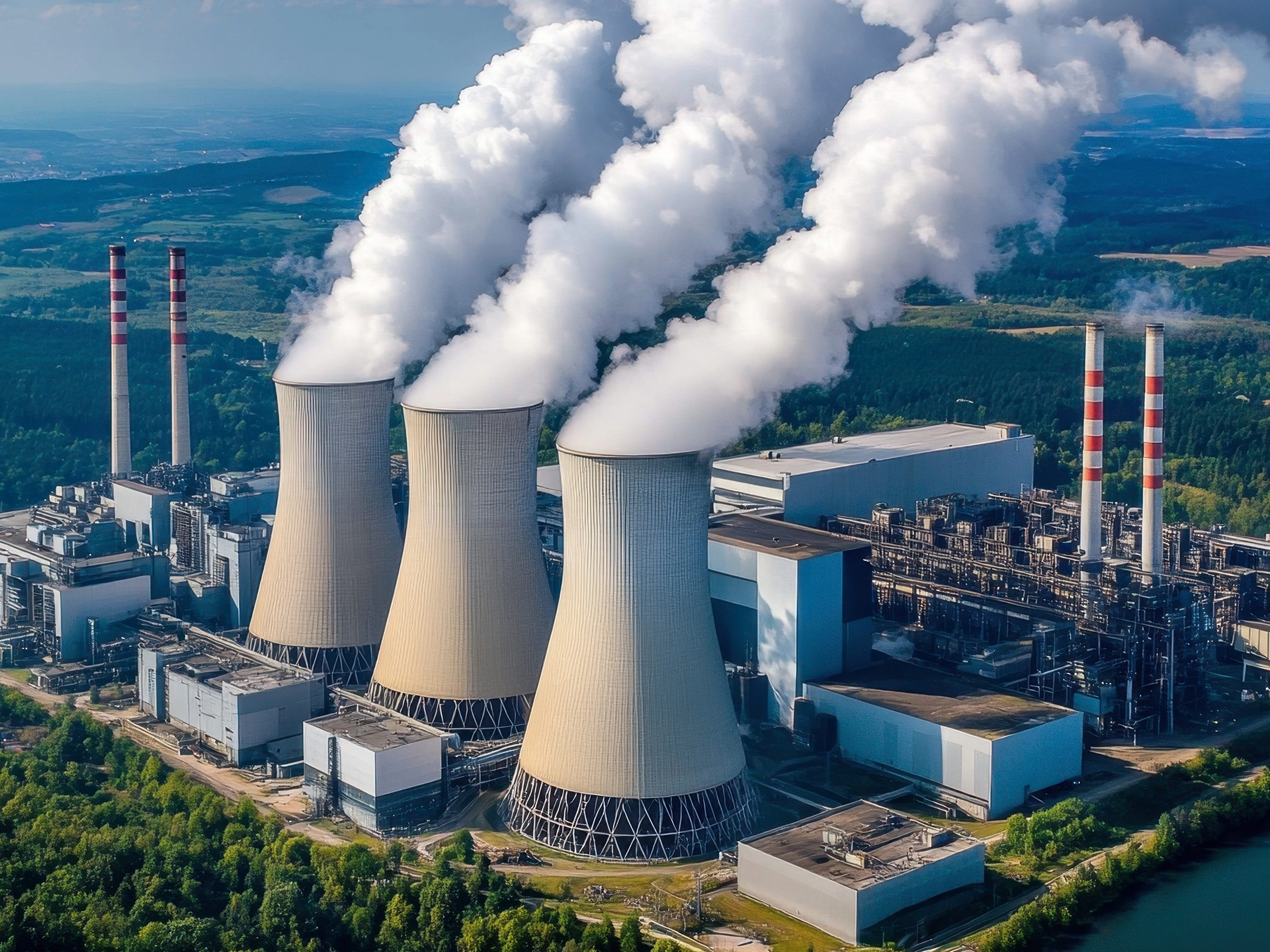
The self-cleaning configuration has demonstrated its effectiveness in industrial applications that are highly prone to gypsum fouling. Experience from other industries with process streams containing gypsum prove that stable heat transfer is possible even under challenging scaling conditions. Furthermore, the operating principle behind the Klaren MVR system for treating wastewater from wet flue gas desulfurization was successfully validated within the scope of a pilot project at a coal-fired power plant in China under realistic process conditions.
Implementing MLD and ZLD efficiently and economically
By reliably pre-concentrating FGD wastewater, the Klaren MVR system relieves a lot of the burden on the downstream spray drying process. This makes it possible to reduce investment and energy costs, improve plant efficiency, and implement MLD or ZLD requirements economically.